
Melbourne hotels: how to choose a good one
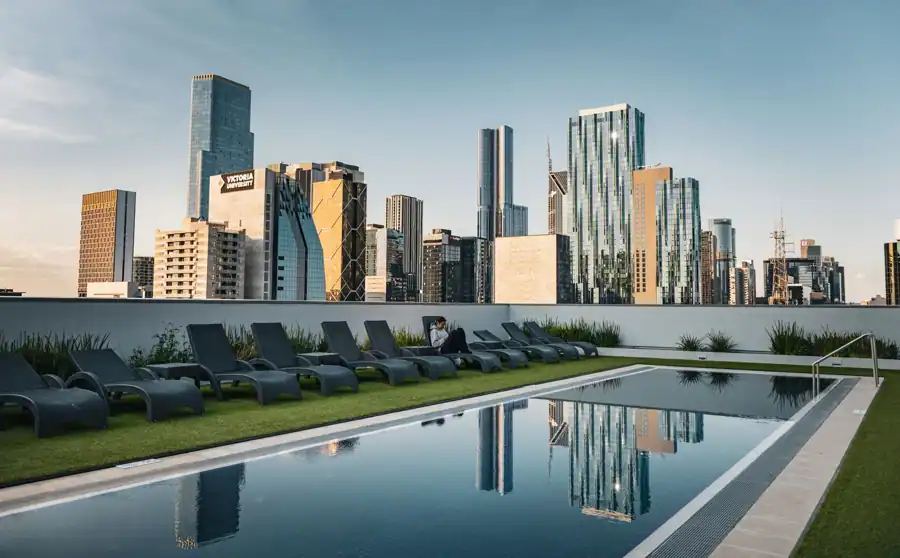
Melbourne rewards the traveler who picks the right postcode. Choose well and you walk to dinner, coffee and the tram. Choose badly and you spend forty minutes each morning commuting into a city you came to see.
This guide takes about ten minutes to read. It covers the districts worth paying for, what rooms actually cost by season, and the three checks that separate a good Melbourne hotel from a bad one. No booking required, just a map, a budget and a shortlist.
The district matters more than the hotel brand
In Melbourne, location decides your trip more than the logo above the door. The city is compact and walkable in the center, but the neighborhoods behave very differently after dark.
Here is how the main areas compare for a typical visitor.
| Area | Best for | Walk to CBD | Typical nightly rate | Watch out for |
|---|---|---|---|---|
| CBD (Collins, Bourke St) | First trips, business | 0 min | $180-$350 | Noise on weekend nights |
| Southbank | River views, families | 10-15 min | $200-$400 | Chain restaurants, fewer cafes |
| South Yarra | Food, boutiques | 15 min by tram | $160-$300 | Quieter evenings |
| St Kilda | Beach, budget | 25 min by tram | $120-$250 | Older building stock |
| Docklands | Events, new builds | 15 min | $150-$280 | Empty streets at night |
If it is your first visit, stay in the CBD or Southbank. You get the tram network, the laneway coffee and the river all within a walk. If you have been before, South Yarra and Fitzroy give you the Melbourne locals actually live in.
And the third factor, the one that quietly decides whether you overpay, is timing. More on it below.

Central Melbourne is small enough to walk, but each district has a different evening personality.
What hotels in Melbourne actually cost
Melbourne is the cheapest of Australia's big three cities for accommodation, usually 10-20% below Sydney for the same standard. That gap is your advantage, and it disappears fast in the right season.
Rates swing hard with events. The Australian Open in January, the Formula 1 Grand Prix in March and the AFL Grand Final in September push CBD rates up sharply, sometimes doubling them. Book those dates six months out or move your trip a week.
Two practical rules. First, a 4-star room in the CBD at $180 is a better buy than a 5-star in Docklands at $220, you will spend the difference on taxis. Second, anything advertised far below these ranges is usually a room without a window, a shared bathroom, or a building on a construction site.
Check the cancellation terms before the price. A refundable rate costs roughly 10-15% more and is worth it when you are booking months ahead.
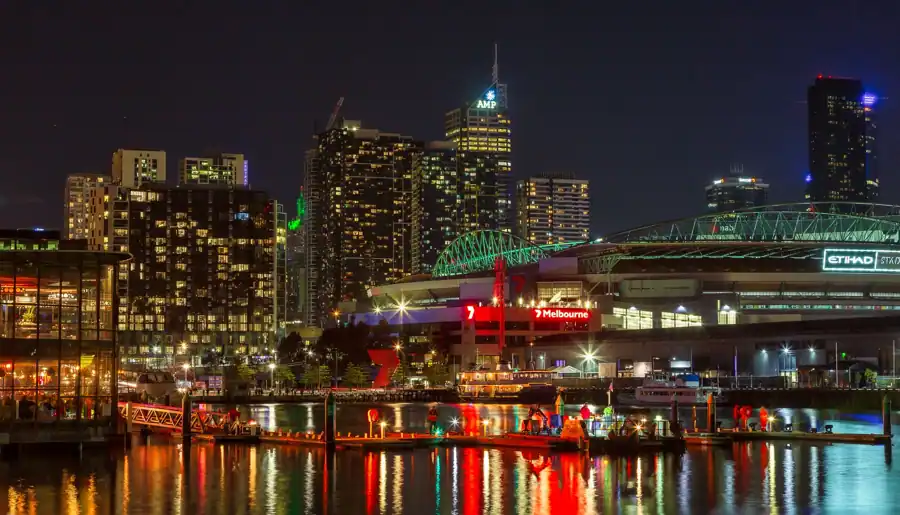
Photo: Robert Stokoe · Pexels
Three checks before you confirm the booking
Photos lie, and Melbourne has a lot of older buildings with beautiful lobbies and tired rooms. Run these three checks and you will avoid most disappointments.
- Open the map, not the listing. Confirm the walking distance to the nearest tram stop or train station. "Melbourne CBD" listings sometimes sit on the far edge of the grid, twenty minutes from anything.
- Read the 3-star reviews, not the 5-star ones. Five-star reviews tell you someone got a free upgrade. Three-star reviews tell you about street noise, thin walls and slow check-in, the things that will actually happen to you.
- Check what is included. In Australia, breakfast is frequently not included, parking runs $25-$50 a night in the CBD, and "city view" often means a view of the building next door.
One more thing worth knowing: Melbourne hotels are generally well run and clean, so a mid-range chain room is rarely a risk. The risk is location and noise.
That is also why the same brand can feel completely different two blocks apart, which brings us to how to compare options properly.
How to compare two hotels fairly
Two hotels at the same price are almost never equal. Compare them on the attributes that change your day, not the ones that photograph well.
- Transit: minutes on foot to a tram or train, and whether the line runs at night.
- Noise: upper floor, away from the lift and the street, is worth asking for in writing.
- Room size: Melbourne CBD rooms are small by US standards, 20-25 m² (215-270 sq ft) is normal for a standard king.
- Food nearby: a 24-hour option within five minutes matters more than a hotel restaurant.
- Cancellation: free cancellation until 24-48 hours before arrival is the standard to aim for.
If you are comparing a city hotel against an apartment-style stay, the trade-off is space and a kitchen against daily service. Apartment hotels suit longer trips; serviced rooms suit two or three nights. The same logic applies when you weigh a serviced apartment stay in Byron Bay against a traditional hotel, space versus service, and the answer depends on trip length.
For a sense of how much a well-located mid-range chain can deliver for the money, a property like the Home2 Suites by Hilton Atlanta Airport West shows the pattern: suite layout, kitchenette, free breakfast, no lobby theatre. Melbourne has plenty of equivalents.

Photo: Parth Patel · Pexels
Common mistakes and how to avoid them
Most bad Melbourne hotel experiences come from four avoidable decisions.
- Booking on price alone. The cheapest CBD room is usually cheapest for a reason, no window, no lift, or a nightclub downstairs.
- Ignoring the event calendar. A room at $140 in July can be $400 during the Australian Open. Check dates before you fall in love with a hotel.
- Assuming parking is free. It almost never is in the city center. Budget $25-$50 per night or leave the car outside the CBD.
- Staying in Docklands for the "new" buildings. They are new. They are also quiet in a way that means empty, few cafes, few people, long walks.
If something goes wrong on arrival, wrong room, noise, no hot water, ask at the desk immediately. Melbourne hotels are used to fixing these on the spot, and waiting until checkout usually means you get nothing.
Frequently asked questions
What is the best area to stay in Melbourne, Australia?
For a first visit, the CBD or Southbank. You get the tram network, the river, the laneways and the restaurants on foot. For a second visit or a longer stay, South Yarra, Fitzroy or St Kilda offer more local character at lower prices.
What is the average cost of a hotel in Melbourne?
Expect roughly $130-$250 per night for a good 4-star room, depending on season and events. Luxury and river-view properties run $300-$500 and higher during the Australian Open.
What is the best month to visit Melbourne?
March to May and September to November give mild weather and reasonable rates, though March carries a Grand Prix price spike. January is the hottest and busiest month because of the tennis.
Is Melbourne cheaper than Sydney for hotels?
Yes, typically by 10-20% for comparable standard and location. That makes Melbourne a good base if you want a higher-grade room for the same budget.
Do Melbourne hotels include breakfast?
Often not. Many CBD properties charge separately, and cafe breakfast is a Melbourne ritual anyway. Check the rate details before you assume it is included.
Pick the district first, check the calendar second, and read the three-star reviews last. Do those three things in that order and you will almost always land a hotel worth the money.
More on the site
Read next
Warsaw hotels: how to choose a good one
Warsaw has roughly 7,800 hotels and other places to stay. That number is the problem, not the solution. You can book a room here for about $70 a night…

A practical guide to hotels in China
If you're traveling from Japan to China right now, the headlines are loud. But here's what actually matters at the front desk: your reservation, your …

A practical guide to hotels in Ubud
Where to stay in Ubud: the short answer Ubud sits in the uplands of Greater Denpasar and functions as Bali's cultural centre, which is why so many tra…